
Somebody has to find out what shape a commercial roof is in. For years that meant a ladder, a harness and a person walking on a surface that may not hold up. Today I do it two ways. I walk the roof when it is accessible, safe and the weather allows, and I fly the drone for the full view from above. Here is what the drone sees and why it matters.
Walk It When It Is Safe, Fly It When It Is Not
Safety decides it. If a roof is accessible, safe to stand on and the weather cooperates, I walk it. If it is too steep, too complex, too wet or too large to cover safely on foot, the drone does that part, so nobody takes a risk on a weak membrane or a slick slope. On most jobs I use both.
I hold an FAA Part 107 Remote Pilot certificate, so the flights are flown under FAA rules. Safe is good. Flown by a certified pilot under FAA rules is what lets a lender, a building owner or an insurance company rely on the photos.
What the Drone Sees
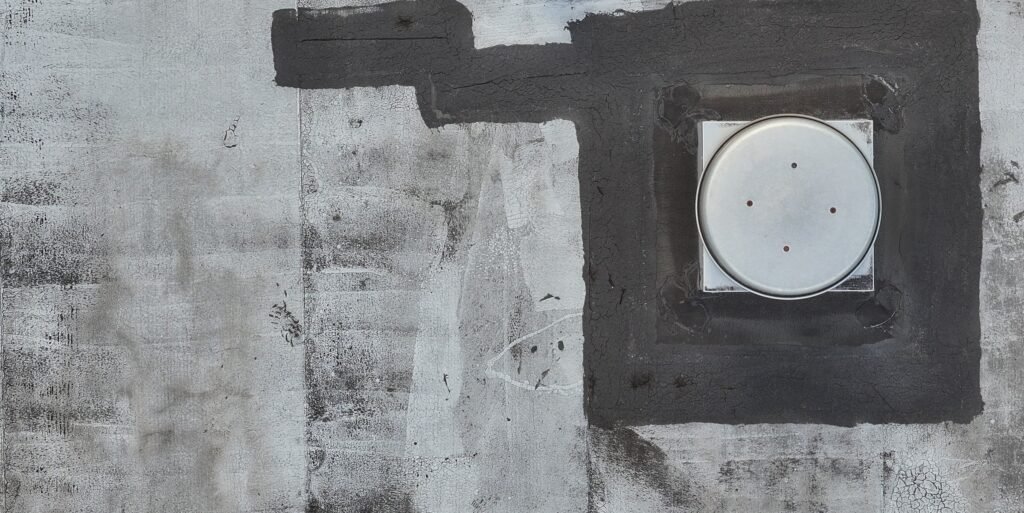
A drone looks at the roof from angles and distances a person on a ladder cannot reach. The flight covers roofs, facades, flues and gutters. On a commercial roof, I am looking for:
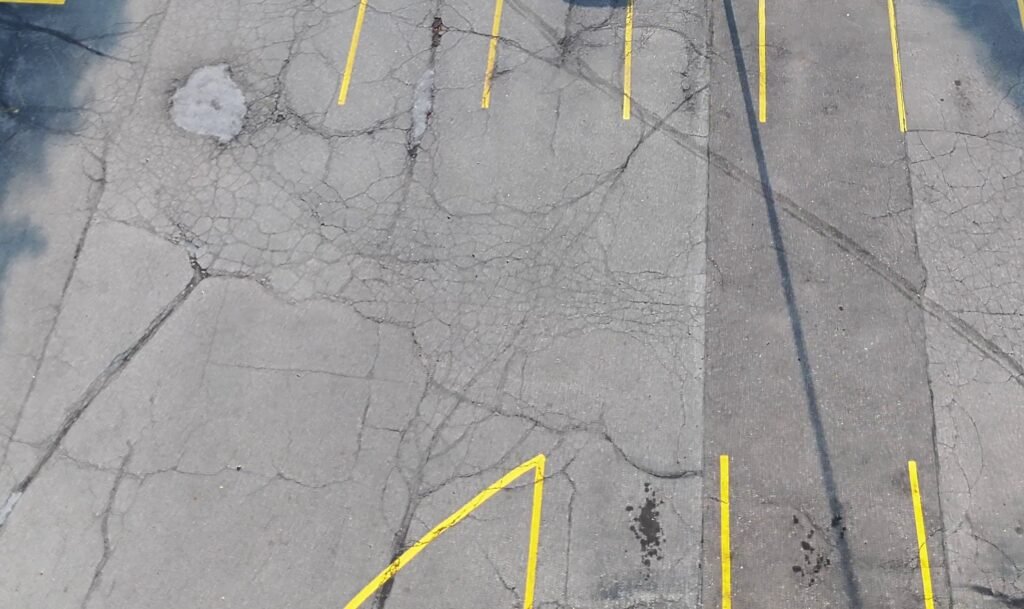
- Damage. Membrane damage, cracked coatings and surface wear.
- Flashing. Flashing defects at edges, parapet walls, curbs and flues.
- Drainage. Drainage issues, including ponding on flat roofs, where water sits instead of leaving.
- Penetrations. Vents, pipes, skylights and HVAC curbs, the spots where leaks usually start.
- Debris. Leaves and buildup near drains and edges that can hold water where it does not belong.
A drone sends back hundreds of high-resolution photos. I go through them on a screen, zoom in on the details, and mark what needs attention. The photos stay in the file, so you are not taking my word for it.
Faster, and More of the Roof
Time is the other win. On large roofs, a traditional inspection can run two to four hours. A drone survey takes 30 to 60 minutes. It also reaches the whole roof, not just the parts a person can safely walk.
A drone is still a camera, and a camera only sees what is visible. If something looks wrong, I note it and say what it needs next. I do not guess from a photo.
Where Thermal Helps
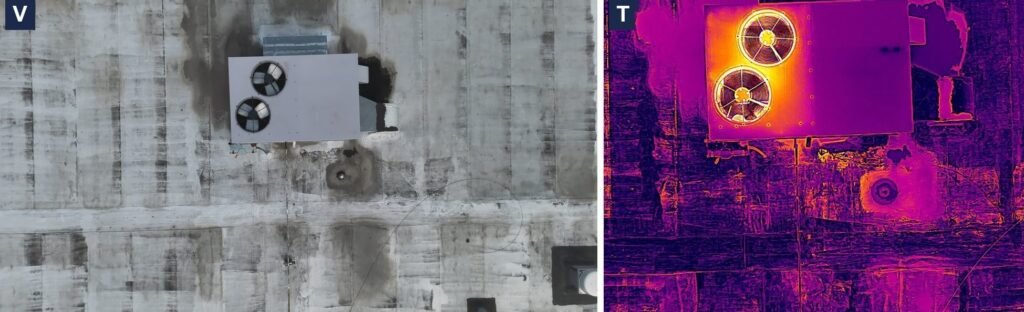
On commercial buildings, thermal imaging is available as an optional add-on at additional cost. It is not part of a standard drone inspection. When you add it, it can show missing insulation, moisture behind walls, HVAC inefficiencies and hidden water damage, things the eye cannot see. It is useful for energy assessments too. I use it as a lead, not a verdict. A thermal image points me to where to look closer.
Commercial Buildings in Michigan
I use drone work on commercial buildings in Michigan. It is part of the assessment, and it supports commercial project oversight too, with progress views and verification of exterior work. Read more on the drone services page or the commercial inspections page.
I have been a builder for over 30 years, a Licensed Builder in Michigan since 1994, and a HUD-Approved 203(k) Consultant since 2019. My drone work is on commercial properties in Michigan. If you have a commercial roof you are unsure about, call me and we will talk through it.
Want Eyes on Every Part of Your Roof?
Tell us about the building. Thirty minutes on the phone will tell you whether a drone survey fits the job.
Call: 248-469-8460
Email: mal@mis203k.com